
From the journal · Scott Hinojosa
Enlightenment Is a Map, Not a Trophy
The goal was never to arrive at a fixed state. It was to use the map, and then to put it down when the territory demanded something the map could not show.
Enlightenment is one of the most shopworn words in modern spirituality, used to sell stillness, certainty, and a final boss fight with your own humanity. That usage is a category error. The old languages were not promising a permanent trophy state. They were offering orientation: a way to read the weather inside a life that will not stop moving.
This essay treats enlightenment as map, not destination. Maps can be wrong, outdated, culturally specific, or beautiful-but-partial. The skill is not worshipping the map. The skill is knowing when the territory has outgrown it, and having the nerve to walk anyway.
Incomplete maps

Many traditions drew pictures of freedom. Those pictures disagree in the details, what must be renounced, what must be integrated, what counts as “realization.” That disagreement is not always confusion. Often it is honesty: the territory is larger than any single cartographer.
When a map is treated as the whole world, three things happen. First, you start policing yourself for map-compliance instead of living. Second, you confuse states with character, a good week becomes proof, a bad week becomes shame. Third, you outsource discernment to whoever sold the cleanest diagram.
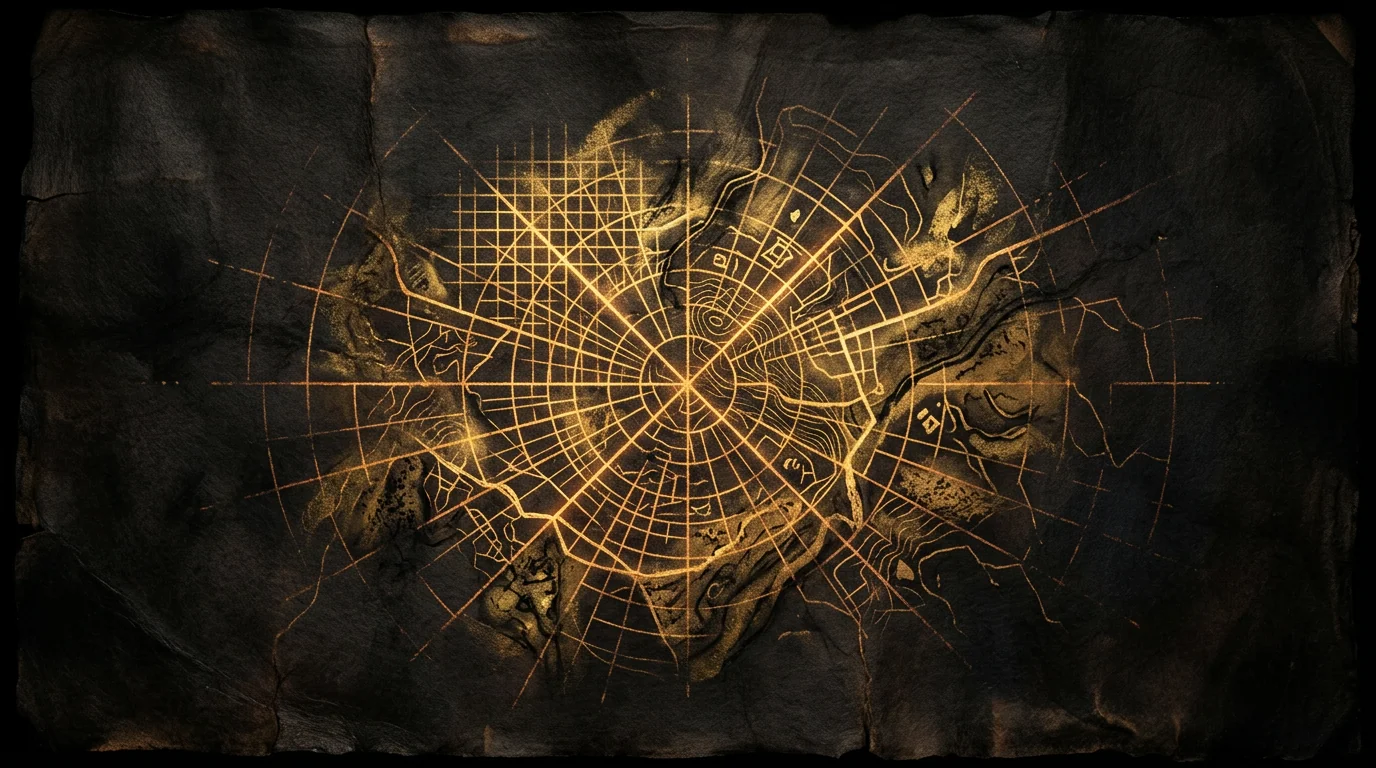
Speculative content, stated plainly: When we speak mythically about “awakening,” we are naming patterns in experience, not a single measurable object in a lab. Hold the poetry; test the consequences.
The fixed state is a trap

Markets love a finish line. So do anxious minds. “Enlightened” becomes a static brand: always calm, always kind, always unbothered.
That brand is useful for retreats and thumbnails. It is a poor fit for an actual nervous system attached to a mortgage, a family, a country, a history.
If your practice makes you more brittle, more identified with a mood, more contemptuous of ordinary life, you are not failing enlightenment. You may be overfitting a map. The territory includes grief, desire, anger, stupidity, and love that does not look photogenic.
A map that cannot make room for those is not holy. It is incomplete.

Territory beyond the legend

Territory is what you meet when the map stops helping: the conversation you cannot script, the grief that does not respect your insight, the ethical knot with no clean hero. At that edge, the question is not “Am I enlightened?” The question is what kind of person am I practicing to become, and can I admit uncertainty without collapsing into cowardice or cruelty?

Moves

-
Separate signal from story. Name one spiritual concept you use to punish yourself. Cross it out. Replace it with one behavioral test you can run this week: What did I do with my hands? What did I say to someone I love?
-
Demote certainty. If you cannot describe your “truth” in plain language without jargon, you are not deeper, you are less inspected.
-
Track integration, not mood. Mood spikes. Character shows in repair, repetition, and cost paid over time.
-
One hour of ordinary life without performance, no breathwork brand, no identity narration, just food, chores, silence, or conversation that does not need you to be impressive.
-
Read one primary text slowly in its own world before you import it into yours. Context is not optional.
Safeguards
- Closed traditions. Do not strip-mine rituals for aesthetics. If you are not in relationship with a tradition, be honest about what you are borrowing, and what you are not.
- Teachers and power. Charisma is not verification. Outcomes over time matter more than peak experiences.
- Aftercare. Dissolving a false map can feel like losing ground. Build support that tolerates not knowing without rushing to the next belief.

In plain words
The goal was never to arrive at a fixed state. It was to use the map, and then to put it down when the territory demanded something the map could not show.
We work with people who are done with one-size-fits-all spirituality and ready for something that fits the life they are actually living.
When you are ready, the assessment is where we begin.
Continue reading
More from the journal.

What a Practitioner Adds That Information Alone Cannot
Information can describe a method. A responsible practitioner adds context, calibration, scope, accountability, and a relationship that can be questioned.
Read on
What Practitioner-Encoded AI Means at LITA
Practitioner-encoded means the tool works inside a defined LITA framework with human review, stated limits, and room for correction.
Read on
Where it leads
If this sounds familiar, the next step is simple.
The point is not to collect better language for the same patterns. The point is to identify what is running and decide what happens next.