From the journal · Scott Hinojosa
The Naming of Riders
An original myth about inherited patterns, the danger of romanticizing them, and the power of naming what has been steering us.
The following is an original LITA myth. Its setting and cosmology are invented. It does not depict or combine any living spiritual tradition.
In the city of Bellweather, people believed every child arrived alone.
That belief was convenient. It meant adults never had to explain why a family argument could survive three generations or why a fear nobody remembered choosing could still decide where a person worked, loved, and slept.
Mara knew the belief was wrong because she could hear hoofbeats when she lied.
The sound began softly behind her ribs. If she agreed to something she resented, the hoofbeats quickened. If she apologized for taking up space, they broke into a run.
No one else heard them.
“You are imaginative,” her teachers said.
“You are dramatic,” her friends said.
“You are just like your mother,” her father said, which was the first answer that sounded like a clue.
The archive below the station
Bellweather’s oldest train station had been closed for years. Beneath it sat an archive of abandoned maps, letters, contracts, and household ledgers. Mara took a job cataloging them because the work was quiet.
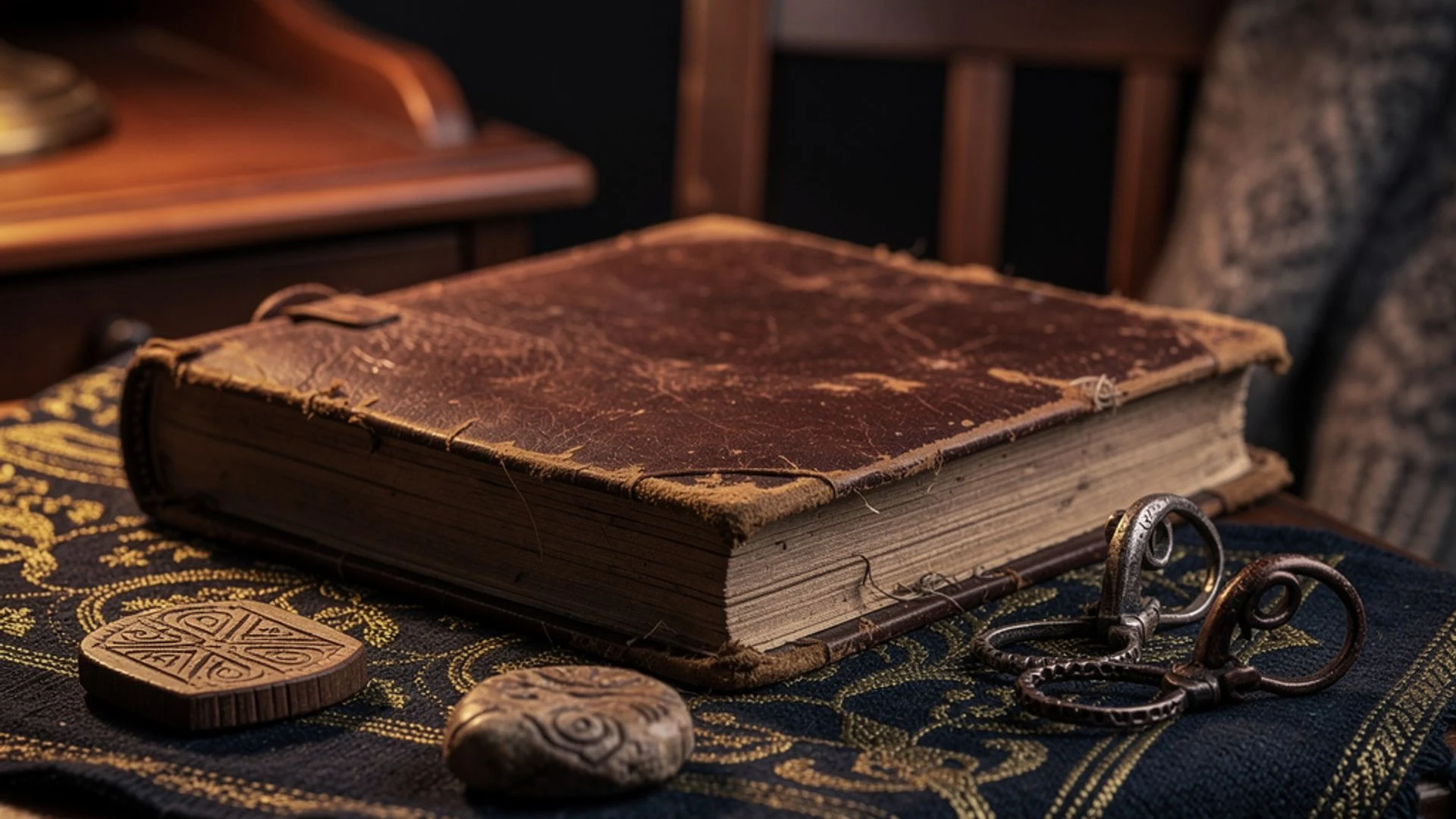
One afternoon she opened a box marked FAMILY WEATHER.
Inside were records written by people she knew only from photographs. A great-grandfather had lost the family store after trusting the wrong partner. A grandmother had hidden cash in flour tins for forty years. An uncle had refused every promotion because visibility felt dangerous. None of them used the same words, but all of them lived as though security could disappear overnight.
The hoofbeats became loud enough to shake dust from the shelves.
Mara ran upstairs and found the archivist locking the doors.
“Something has been following my family,” Mara said.
“Probably several things,” the archivist replied. “Do not make them more magical than they are.”
A rider is not a demon
The archivist explained that Bellweather once used the word rider for any inherited pattern that could take the reins before a person noticed.
Some riders began as survival. Save everything. Trust nobody. Stay useful. Never be seen needing help.
Some began as privilege. Assume the room will make space. Treat comfort as evidence of merit. Call other people’s labor natural.
Some came from institutions, not families. A workplace could teach a rider. So could a church, a neighborhood, a school, or a nation.
“Is the rider evil?” Mara asked.
“That question keeps people from studying the saddle.”
A rider was not a hidden being and not a diagnosis. It was a name for a pattern with history, triggers, rewards, and costs. The metaphor mattered only if it returned choice to the person using it.
Naming without surrendering
Mara began recording the hoofbeats.
They appeared when money was discussed, when somebody offered help, and when she considered work that might make her visible. The pattern protected her from betrayal by treating every opportunity as a trap. It also kept her exhausted and alone.
She named it Sudden Winter.
The name did not banish anything. It gave her one second of distance.
When a new contract arrived, Sudden Winter told her to decline before reading it. Mara felt the reins tighten. She waited, asked a lawyer to review the terms, negotiated one clause, and signed.
The hoofbeats continued.
Agency did not feel like silence. It felt like making a considered choice while the old alarm was still audible.
The city changes its story
Years later, Mara became keeper of the archive. She removed the sign that said FAMILY WEATHER and replaced it with a question:
What has been steering, and what does it cost now?
People brought records. They also brought stories, corrections, and arguments. No one was allowed to claim that a pattern explained everything. No one was allowed to use an ancestor’s suffering as an excuse to keep causing harm.
Bellweather slowly gave up the belief that every child arrived alone.
The city adopted a better one: we inherit conditions, not verdicts.
Naming a rider is not proof of spiritual insight. It is the beginning of an investigation. Where did the pattern come from? What still activates it? What does it protect? Who pays for that protection? What support would make a different response possible?
The point is not to destroy every inheritance. Some carry skill, humor, devotion, craft, and courage. The point is to notice when an old survival strategy has mistaken itself for the only road.
You may hear hoofbeats for a long time.
You can still learn to hold the reins.
Continue reading
More from the journal.

Where it leads
If this sounds familiar, the next step is simple.
The point is not to collect better language for the same patterns. The point is to identify what is running and decide what happens next.