
From the journal · Scott Hinojosa
Beyond the Fragments: The Story of a Mountain
Priests, mystics, scientists, and dreamers each hold a fragment. The mountain only appears when the fragments are woven into a whole.
There is a mountain that has haunted human imagination as long as stories have been told. Everyone claims to know where it is. Everyone swears their map is the only true one.
This parable names a practical problem: integration. How do you hold ritual, ecstasy, evidence, and imagination without letting any single voice veto the others, or pretend it already speaks for the whole?
The maps people swear by

One traveler follows the priests. Incense, song, the weight of old words. Ritual quiets the heart; prayer settles the mind.
The body responds, blood pressure eases, rhythms slow, stress softens. The traveler bows, and notices the habit: gaze fixed upward, power placed elsewhere. To climb, one waits for permission.
Permission that never quite arrives.
Another path winds toward the mystics. Fasting, chanting, nights peeled open. The veil thins; the infinite breaks through in brightness that burns.
Then the return: strangers at the kitchen table, heaven remembered, earth awkward. The peak can be real, and lonely.
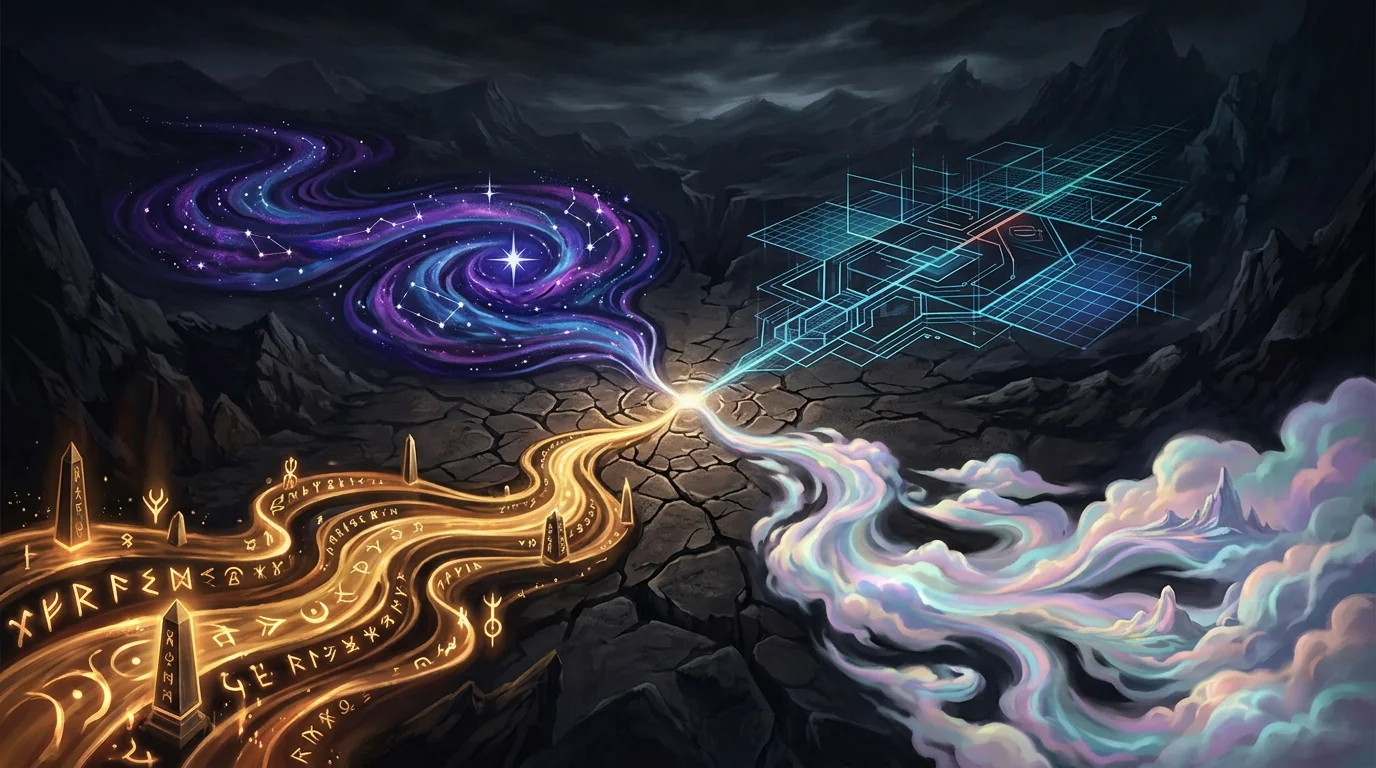
The traveler turns to those who measure. Machines instead of prayers, electrodes, scans, transmitters, clean diagrams. Denying the clarity would be silly.
But clarity is not ascent. A map explains shape; it does not climb for you.
Then the new teachers, light on their feet: imagine the summit and you are already there. Imagination does move reality, athletes rehearse; patients visualize repair. Yet some dream without walking, speak abundance while drowning in avoidance. The mountain cannot be wished into being.
Shards that cut

It would be easy to dismiss them all as illusion. Illusion is not the same as falsehood. The priests knew story and rhythm. The mystics knew direct contact.
The scientists knew constraint and precision. The dreamers knew rehearsal and symbol. None of them lied.
None of them held the entire ridge alone.
Alone, each fragment can cut. Together, if you are willing, they can become a lens.
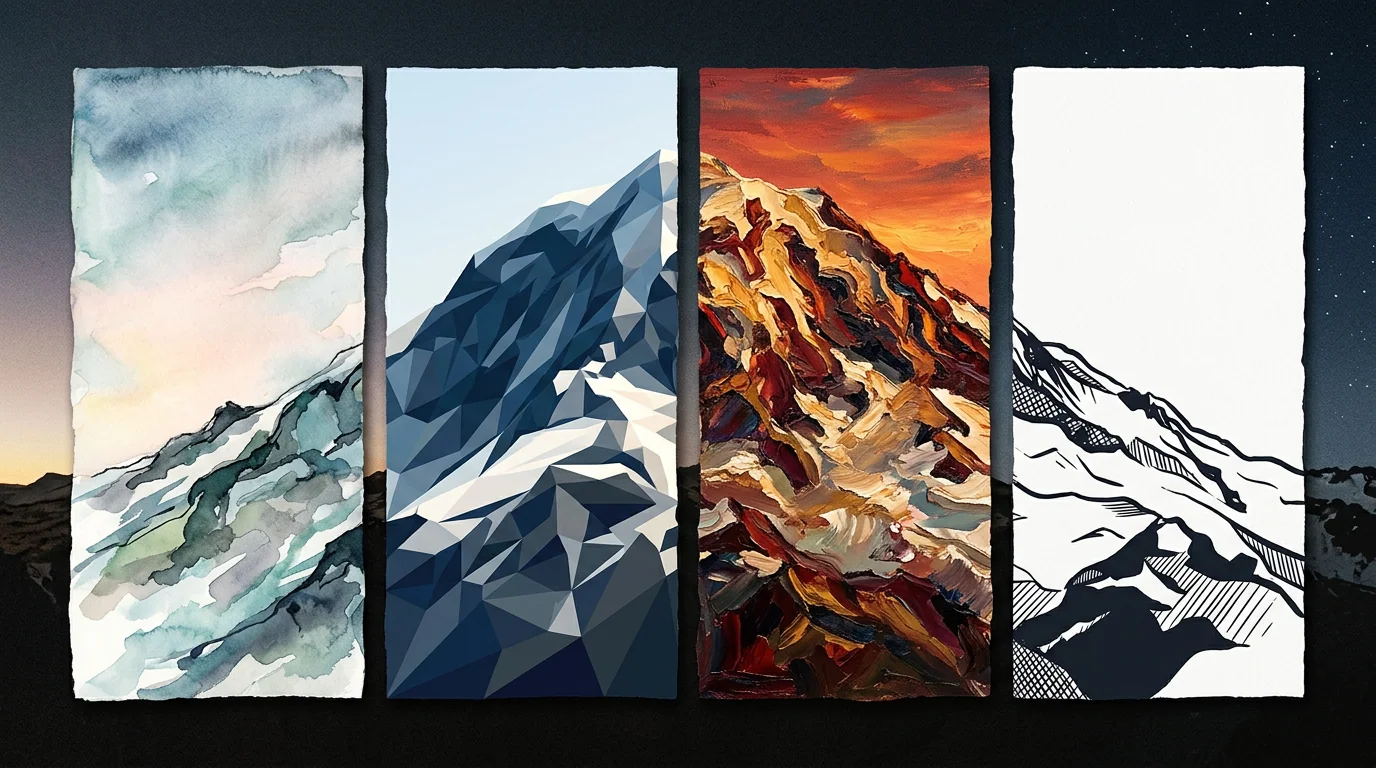
Weaving the whole

Wholeness is not endless kneeling in dependence. It is not only dissolving into visions you cannot live. It is not data stripped of wonder. It is not fantasy untethered from discipline.
The mountain stands where body, mind, and mystery braid: where the nervous system learns new rhythms, where ritual anchors the psyche, where shadow is met instead of laundered, where imagination rehearses coherence until it becomes livable.
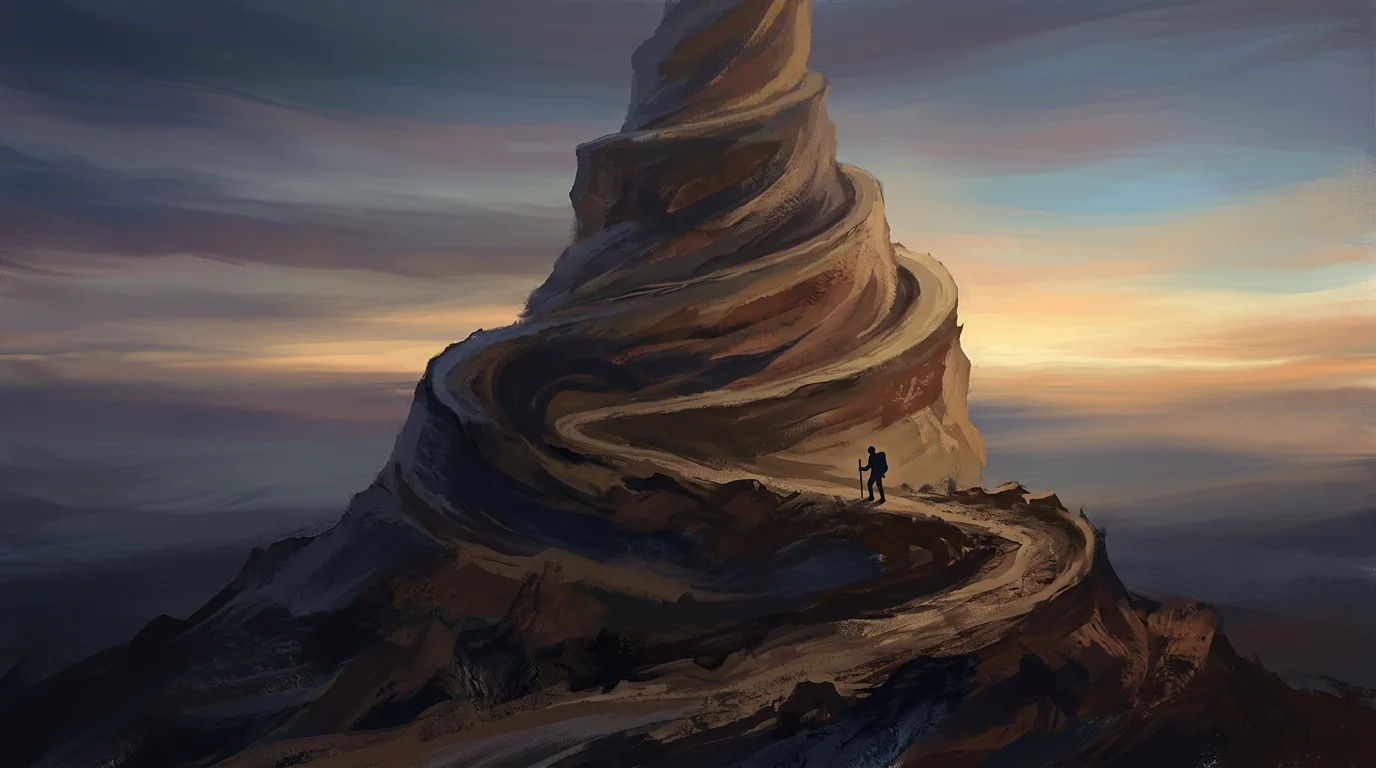
Here the traveler understands: enlightenment is not a trophy peak waiting up ahead. It is a pattern waiting to be embodied. Names differ, salvation, union, rewiring, integration. The mountain does not care what you call it.
Moves

-
Name your default fragment, the voice you let win by reflex (reason, rage, spirit, image). Demote it from dictator to witness.
-
One week, one honest practice from a tradition you do not own: prayer, silence, study, embodied skill, done without posting it.
-
Translate ecstasy into behavior, if the vision does not change how you treat someone weaker than you, it is tourism.
-
Translate data into humility, if measurement kills wonder, you are overfitted; if wonder kills measurement, you are unmoored.
-
Ask nightly: What did I weave today, what did I only collect?
Safeguards
-
Closed traditions: borrow with respect; do not cosplay initiation or steal songs because they photograph well.
-
Power: the person who “has the whole mountain” in a sentence is often selling something. Hold your wallet and your grief.
-
Health: spiritual ambition is not a substitute for medical care. Parallel tracks, not replacements.
Last word
When others ask where the mountain lies, the traveler stops pointing at priests, mystics, scientists, or dreamers alone. The smile is not smug. The question is no longer where.
Will you keep wandering among fragments, or begin weaving the whole?
When you are ready for that weave in your actual life, not only in metaphor, the assessment is where we begin.
In plain words
Priests, mystics, scientists, and dreamers each hold a fragment. The mountain only appears when the fragments are woven into a whole.
Continue reading
More from the journal.

The Visitor and the Vessel
An original parable about revelation, capacity, and why an intense experience cannot do the work of integration for you.
Read on
When Integration Is Weaponized: The Hidden Burnout of Pattern Performance in Practice Leadership
Integration can become performance. When leaders are expected to be fully resolved, fully present, and fully aligned at all times, the cost is often invisible burnout.
Read on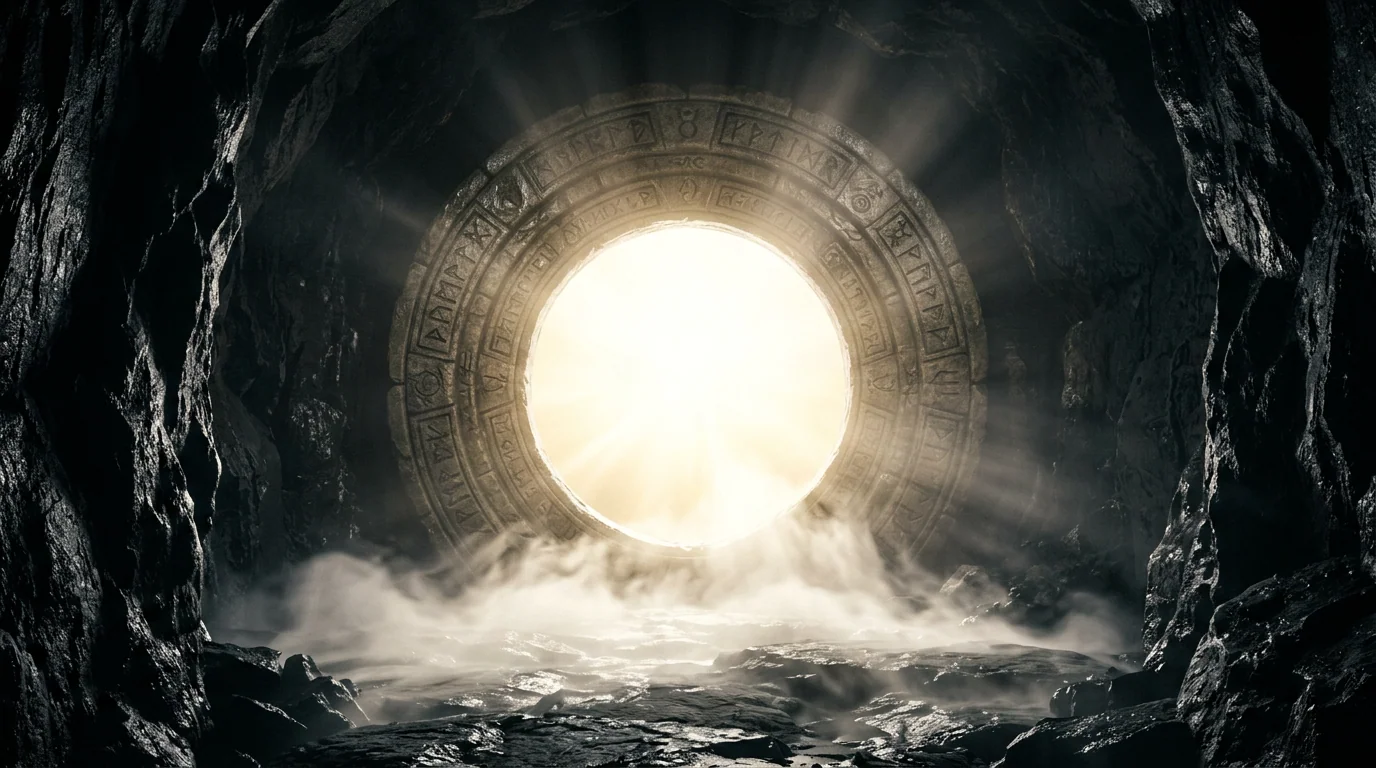
Where it leads
If this sounds familiar, the next step is simple.
The point is not to collect better language for the same patterns. The point is to identify what is running and decide what happens next.